Foil stamping, embossing, debossing and spot UV are often grouped together as "premium finishes," but they work differently and suit different design goals. Choosing the right one, and using it in the right place, matters more than trying to combine several effects on one piece.
Understand what each technique actually does
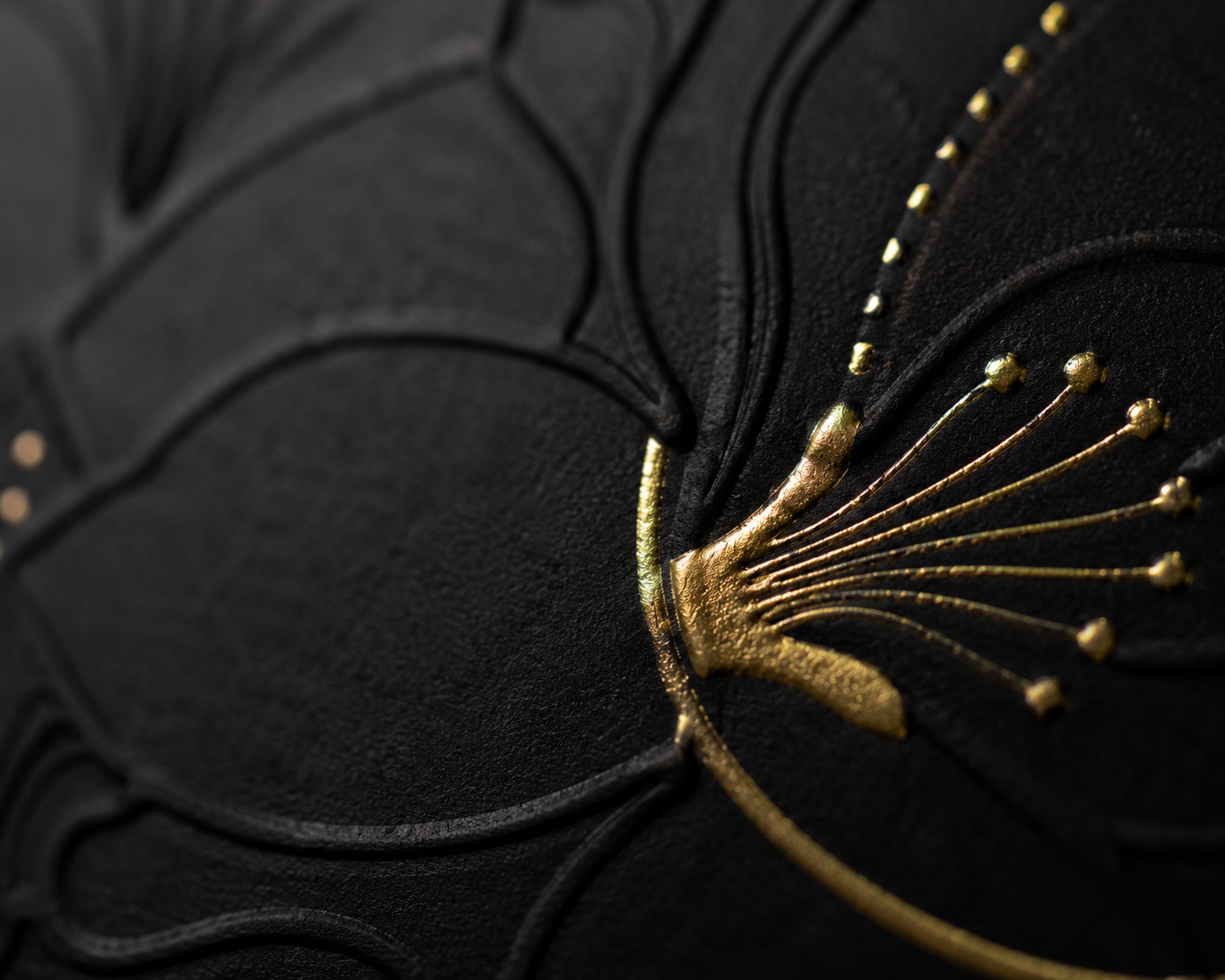
Foil stamping applies a thin layer of metallic or coloured foil to the surface using heat and pressure, creating a reflective, eye-catching mark. Embossing raises part of the design above the surface to create a three-dimensional effect, while debossing presses the design inward, creating a recessed, tactile impression. Spot UV applies a glossy varnish selectively over specific areas, creating contrast against a matte background without adding colour or texture height.
Each of these can be used alone or combined with print, but they are physically different processes with different tooling requirements. Understanding what each one actually produces helps match the technique to the intended effect rather than choosing based on the name alone.
- Foil stamping: adds metallic or coloured reflective surface detail.
- Embossing: raises the design above the surface for a tactile, dimensional effect.
- Debossing: presses the design inward for a subtle, recessed impression.
- Spot UV: adds selective gloss contrast without colour or height change.
Choose foil stamping for logos and high-impact marks
Foil works best on small, well-defined areas such as a logo, monogram or short brand name. Because it reflects light, it draws the eye immediately, which makes it effective as a single focal detail rather than something spread across a large area. Gold and silver are common choices for a classic premium look, while coloured foils can match specific brand palettes.
Foil performs best on smooth, coated surfaces. On heavily textured or very absorbent paper, the foil may not adhere as cleanly, so it is worth checking foil compatibility with the chosen paper stock before finalising the specification.
- Use foil on logos, monograms or short brand marks for maximum impact.
- Gold and silver foil suit a classic premium look; coloured foil can match brand palettes.
- Check foil compatibility with the paper stock before finalising the design.
- Avoid large foil areas, which can increase cost without adding proportional impact.
Use embossing or debossing for a tactile brand impression
Embossing and debossing work well when the goal is a physical, felt impression rather than a visual one. A raised logo on a box lid or a debossed mark on a card creates a detail the customer notices through touch as much as sight, which can make the packaging feel more considered.
These techniques work best with simple, bold shapes. Fine detail, thin lines and small text can lose clarity when embossed or debossed, since the paper needs enough structure to hold the raised or recessed shape cleanly. Heavier board generally holds an embossed or debossed detail better than thin, lightweight paper.
- Use embossing for a raised, dimensional brand detail.
- Use debossing for a subtle, recessed impression that feels understated.
- Keep embossed or debossed artwork simple and bold rather than fine and detailed.
- Use heavier board stock so the impression holds its shape cleanly.
Use spot UV for contrast without added texture
Spot UV is useful when the goal is visual contrast rather than a tactile or reflective effect. Applied over a matte surface, it creates a subtle sheen that highlights a logo, pattern or text area under certain light angles, without changing the surface height in the same way embossing does.
Because the effect is more subtle than foil, spot UV works well for brands that want a refined detail without a strong visual statement. It can also be combined with embossing in the same area for a more layered effect, though this adds production complexity and cost.
- Use spot UV for subtle contrast on matte backgrounds.
- Effective for logos, patterns or text that should stand out gently under light.
- Can be combined with embossing for a layered effect, at higher cost and complexity.
- Best suited to brands that prefer a refined, understated premium detail.
Combine techniques with restraint
It can be tempting to use foil, embossing and spot UV together on a single piece, but combining too many finishes often increases cost and production risk without a proportional increase in perceived value. The strongest premium pieces usually commit to one technique, executed cleanly, rather than layering several effects.
If more than one technique is genuinely needed, it helps to assign each one a clear role, such as foil for the logo and spot UV for a background pattern, rather than applying multiple effects to the same design element.
- Commit to one primary finishing technique per piece where possible.
- If combining techniques, assign each one a distinct role in the design.
- Avoid layering multiple effects on the same small design element.
- Request a physical sample before committing to a combined-finish production run.
Common questions
What is the difference between embossing and debossing?
Embossing raises the design above the paper surface, while debossing presses it inward to create a recessed impression.
Does foil stamping work on all paper types?
Foil generally works best on smooth, coated surfaces. Heavily textured or very absorbent paper may not hold foil as cleanly, so compatibility should be checked before finalising the stock.
Can spot UV and embossing be used together?
Yes, they can be combined for a layered effect, though this increases production complexity and cost compared with using a single technique.